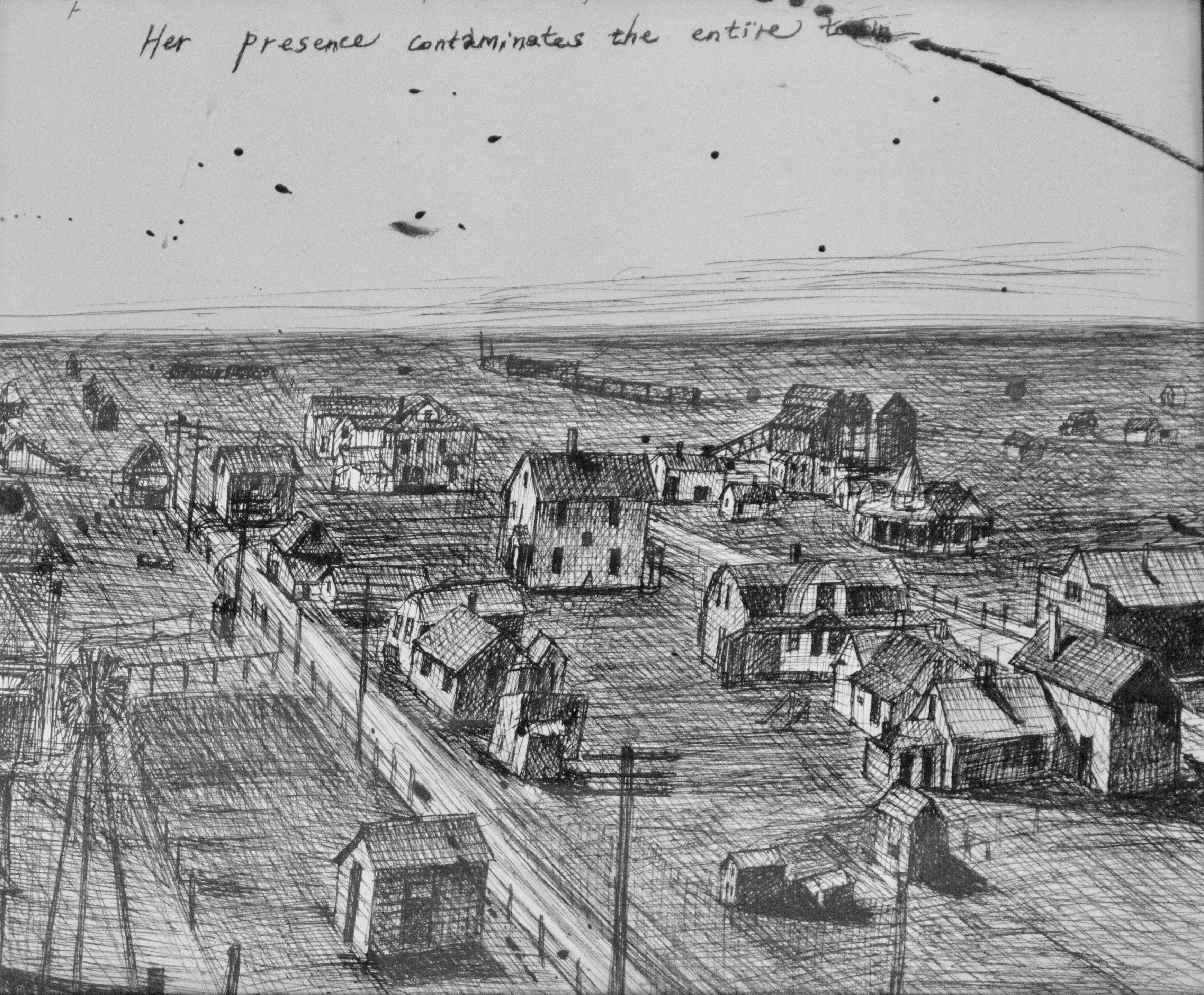
Hit the North part 4

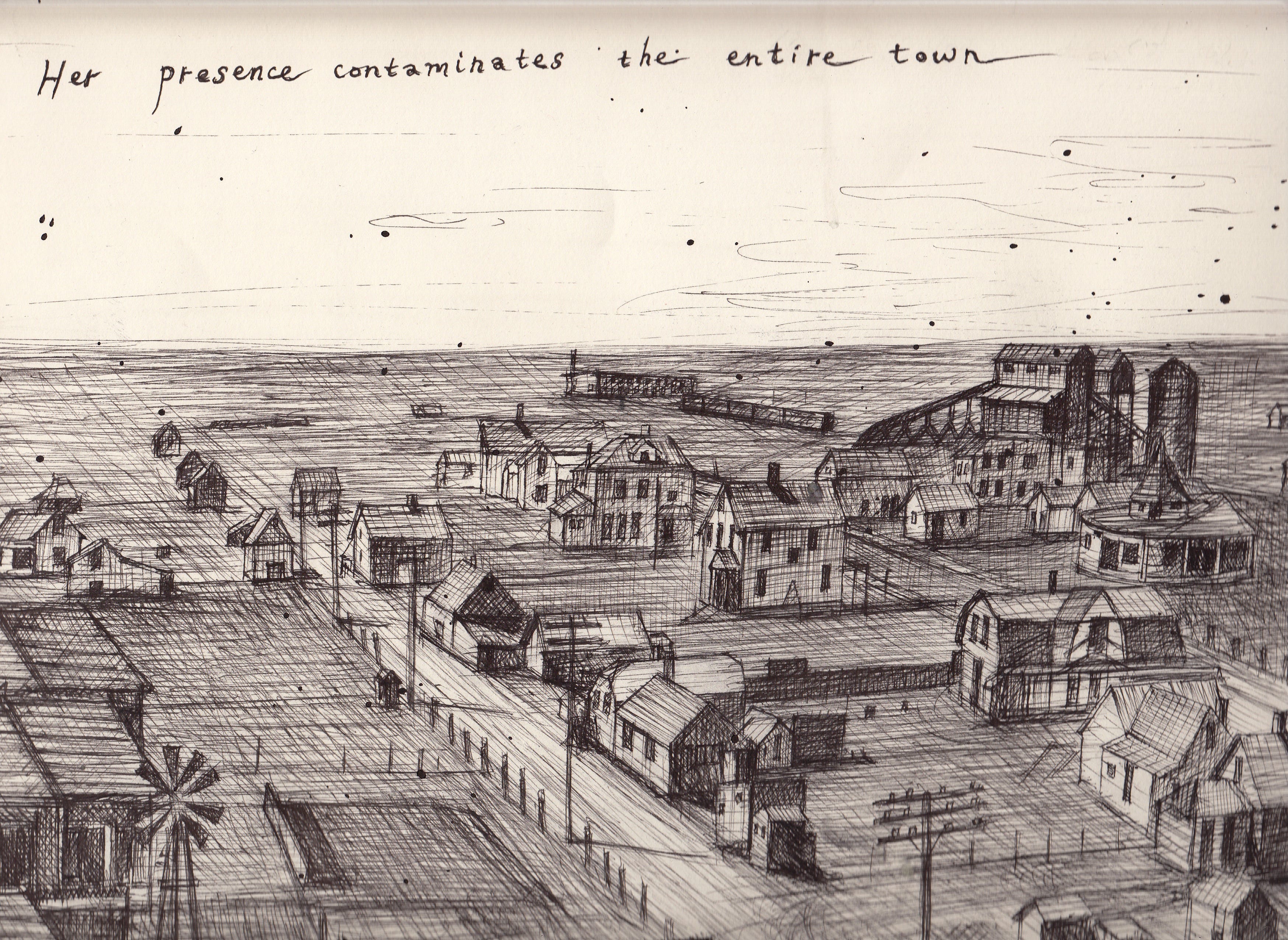
A giant metal sculpture of a barely recognizable swan was shedding its rusted skin outside a red-brick factory. I stood beside a weed-enshrouded baby carriage, listening to the river—the Chippewa, presumably—and watching the leaves washing up against the bank. But such beautiful surroundings, despite their tangible existence, seemed hopelessly remote. I had disclaimed them in a seasonless, denatured city at the other end of the country. I pissed against a pillar, beyond the sight of the mothers and children that were lingering on the bridge above.
The children scattered as I clambered up the embankment. As the sun was setting over the cemetery, I wondered if this would be the last sunset I ever saw in a small town. I walked through an empty park thick with fallen leaves, along silent streets of wooden white houses, and back into town. At the end of another pedestrian bridge a slender, attractive Asian woman in a long black coat passed by and smiled at me. The bookstore was closing. The teenagers in the Democratic campaign headquarters were busy on their telephones. I returned to the hotel and sat in the lobby, browsing back issues of Us Magazine and brooding about Hibbing.
The lights of the Hope Gospel Mission shone brightly into the night: “Lives Rescued Rebuilt Renewed” read the sign above the door, upon which was posted a note inviting “potential residents” to ring the buzzer between the hours of five and ten p.m.. After that hour they were encouraged to call the police, who would, presumably, provide them with shelter.
Following the events of the night before, it didn’t seem advisable to enter the Mousetrap. A skinny redhead was standing outside, smoking. She smiled at me. I entered and looked down the length of the bar, surveying the rats in the Mousetrap. Most of the barstools were taken. The grubby hirsute owner brushed past me, dragging his bum leg along, without acknowledging my presence, which he had barely acknowledged the night before when he cleaned me out at the poker table. I had initially taken him for a local loser and he clearly viewed me as an unlikable and unwelcome outsider.
The skinny redhead smiled again as I walked out. Women in these parts smiled freely; they were just being friendly. On the next block I peered through the window of the Bottle & Barrel. I had peered through the same window at lunchtime and seen a few old men sitting at the bar. A younger crowd now occupied the place. I returned to the Mousetrap. The redhead was wrapped in the arms of a bearded young man in a hooded sweat shirt. She looked up at me expressionlessly as I entered. I went back to the Bottle & Barrel.
This establishment functioned as both bar and liquor store, with a bar on one side and sales counter at the other. Not wanting to sit next to anybody, I walked to the end of the bar and took the last seat. The voluptuous young bartender took my order: a Green Belt beer. I was the only person drinking alone but the next barstool was soon occupied by yet another shaggy, denim-clad young man. He cradled a small dog that served as a constant object of conversation to everybody that came into their proximity. It seemed more a substitute for its owner’s personality and a social crutch than an actual pet. They were soon joined by an exuberant young woman who expressed herself entirely in high-pitched cooing sounds in place of locution or laughter as they doted over the dog together.
I drank the beer and walked back to the hotel, which served mainly as a residential dwelling. A few scruffy old men shuffled through the lobby as I sat in a sagging armchair and considered the Hibbing situation. I remembered how Stacey had copied down my phone number on a separate piece of paper, presumably for safekeeping, and how she neatly folded it and slipped it into the back pocket of her gray pants. It was bad enough that I cut out early—at four in the morning—but to have done the same thing at four o’clock the following afternoon amounted to a massive and inexcusable failure of nerve and character.
Stacey had seemed surprised when I left the bar on Monday afternoon, just before she got off work, and she had insisted that the drunken oaf move out of the chair so she could sit next to me. How much encouragement did I need? It would be a cop-out to blame it on a hangover. Why should she give any further thought to somebody who was so unassertive? The timing and the location were ideal. Everything fell into place but me. Nothing was delivered. How, after all these years, can one have such experiences and not realize how precious they are going to appear in retrospect? Perhaps one subdues one’s self-consciousness at such times in order to avoid their purity being tainted by foreknowledge.
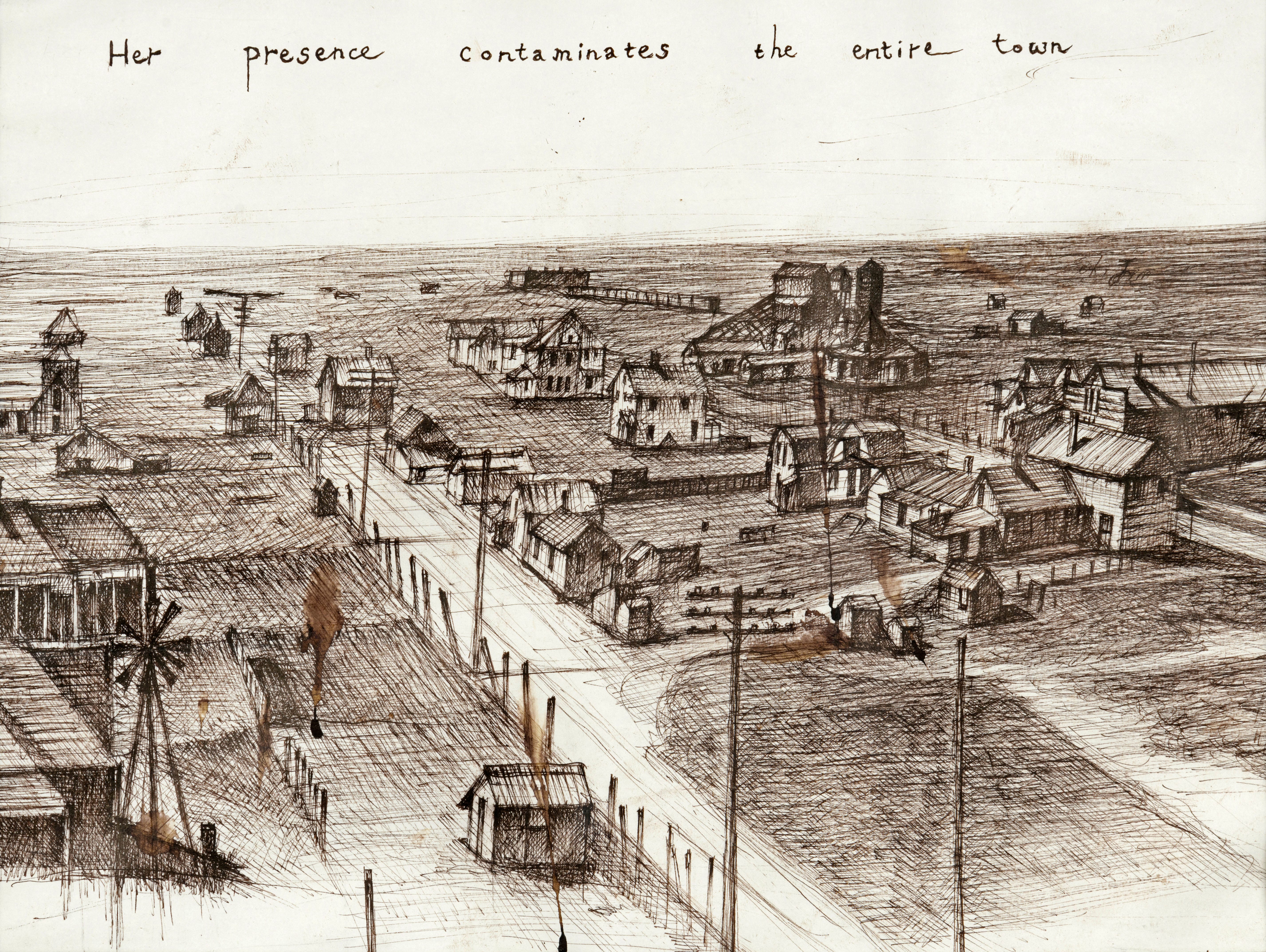
The three-story Antique Emporium on the main street was more like a museum than a store. The price labels on the ancient shadow boxes had faded long ago. One contained a crucifix and a miniature ladder made of a light brown waxy substance that had somehow remained intact for over a century, as had the flowers, feathers and strands of hair wreathed into hearts and crosses in other shadow boxes, exuding a powerful atmosphere of those frail and faded days when life was a lot more tenuous than it is now. One could spend an hour in that emporium and emerge to find one’s present day surroundings imbued with late-nineteenth century morbidity, even as one walked out to find the heart of downtown arrested in the sounds of 60’s easy listening. On this occasion, ‘We’ve Only Just Begun’ piping out of the street corner speakers.
Tyler was flipping eggs in the kitchen of the Grand Avenue Cafe. I sat at a table against the wall in order to avoid him. “Good to see you again,” said the dark-haired waitress. After lunch, I walked across the footbridge, realizing it was the last time I would ever walk across it, and stood there, looking down upon the clear, glistening waters. The last of the leaves were falling. The trees would renew themselves. But we were less like trees than leaves: loose, despite all our efforts to prove otherwise, attached to nothing. I stood there for ten minutes, lost in the tranquility of a perfect autumn day steeped in peaceful sadness, the reward for all the pointless dread and vacillation; and soon they would pass, these rare moments of serenity, leaving only memories that would also pass.
The robust country girl who tended bar at the Bottle & Barrel was working behind the counter of the bakery, and remembered me from the night before. “I hope you’re saving some money,” I ventured after she told me that she had three jobs. “Just paying the bills,” she said, “maybe I’ll be serving you later tonight.” “I doubt it,” I said, “I’m on my way out of town.”
Leaves blew across the street in the autumn sunlight as I stood on the corner, nourishing myself on an apricot pastry. It seemed that I would never be in such a place again, never experience such weather again. The woman from the antique emporium passed by and nodded at me. I was already on nodding terms with a number of the locals. But there was no place for me in a small town. A jangled city creature, it would be difficult to dispel the impression that I had airs and graces. I had already rubbed a few people the wrong way after barely communicating with anybody. I walked back to the hotel, passing the library and the Rescue Mission for the last time. Gusts of wind whipped up clouds of dust in the construction zone. Gordon Lightfoot’s tour bus was parked outside the theater. It would have been fun to stick around for the show but I had made a decision to drive back to Hibbing.