HIT THE NORTH
Ramming it into a dead end

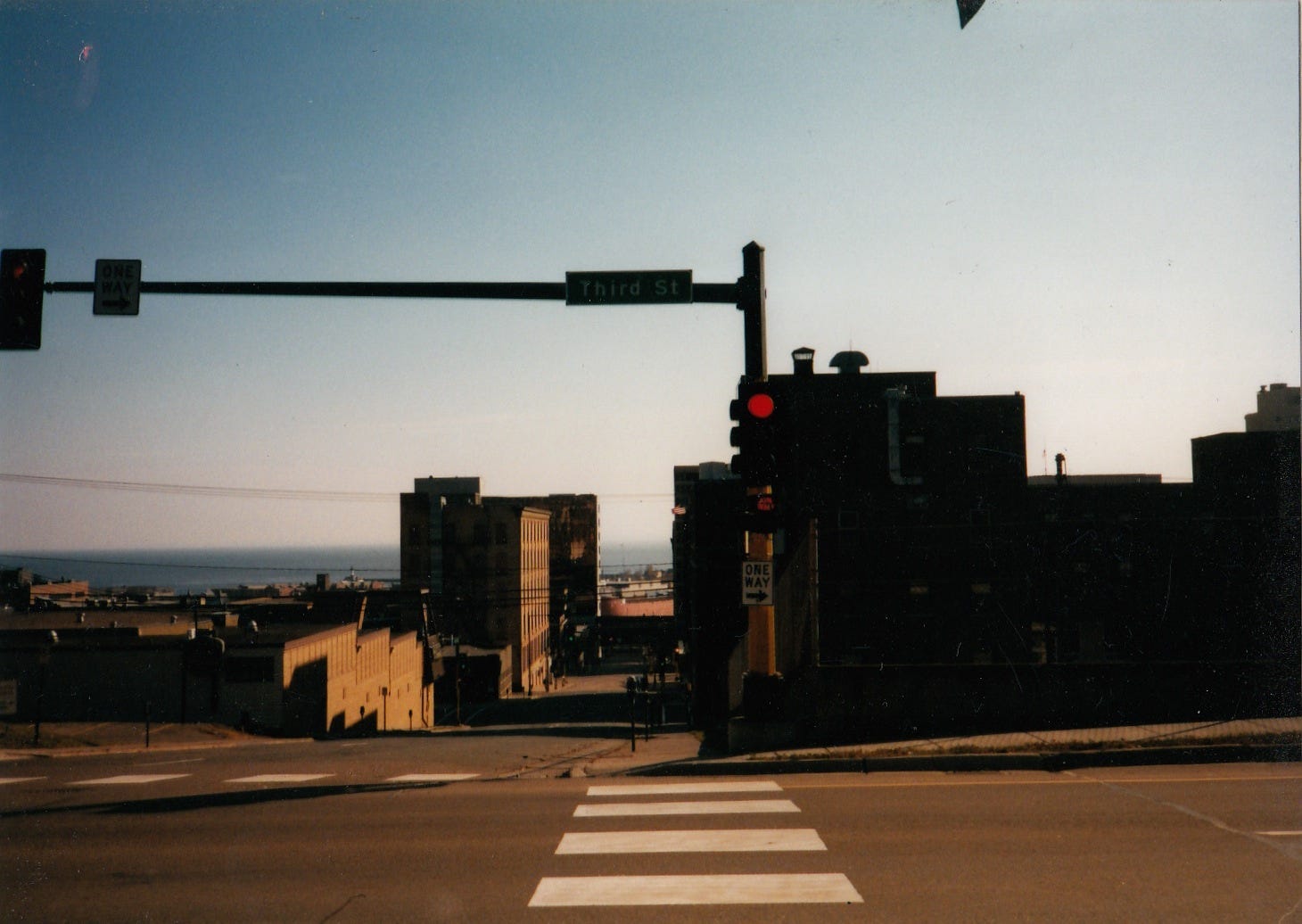
Look at a map, find the middle of the country, trace it as far north as possible, keep going, and that’s where Duluth will be found, in a North as distant as the South is deep.
Until the last moment I agonized over it, sitting in the airport surrounded by a hefty plane-load of bland and bulky Midwesterners, seeing all too clearly the advanced state of discomposure that awaited me, compounded by harrowing insomnia, and conscious of having exhausted this self-indulgent, alienation-addicted way of traveling; yet, with nothing further to prove to myself in this arena, continuing to repeat myself, ramming it into a dead end.
As the last call for passengers was announced I hovered around the entrance gate. What could possibly await me in Minnesota? I was under no obligation to make this trip. It wasn’t something that needed to be done. But all the grinding indecision was just another part of the process, something that had to be worked through. I walked like a doomed man through the tunnel, onto the aircraft. Camus had written something about travel being ‘an occasion of spiritual testing.’ I wasn’t feeling up to it.
At least I had a whole row to myself. I stretched out in my winter coat, but no sleep came, as I knew it wouldn’t. A tall woman in knee-high boots was sitting on the other side of the aisle. I looked over at her and down into the darkness of deserts, mountains, and frozen wastes.
I rented a car at the airport and drove north as the fading autumn foliage emerged out of the cold gray dawn, revealing stripped, spidery limbs of trees and others still resplendent with the colors of the dying season, seeing why Minnesota is known as the Land of Lakes. A Saturday morning bluegrass show played on the radio, broadcasting out of Minneapolis. It seemed that I might have come to the right decision after all.
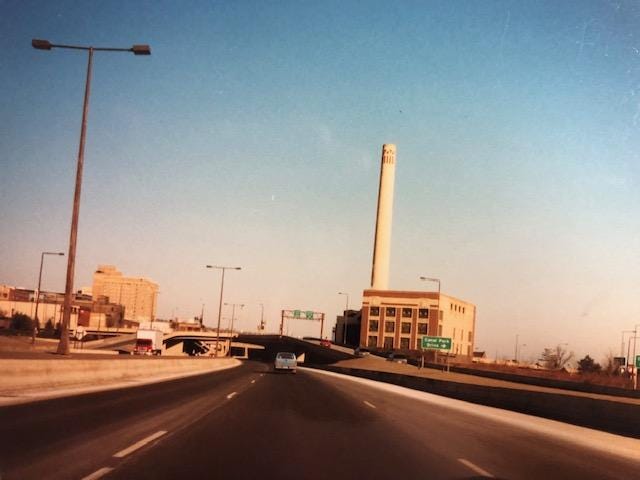
The Midwest is in the perpetual grip of an aversion to style. Duluth is grim grayness, hard sadness; I soon find myself relishing it. Following the usual search, the usual disappointment of finding no old hotels. On the other side of the bay, however, in the town of Superior, Wisconsin stands the Androy, a residential/transient red-brick hotel on the main drag.
The chain mail-clad clerk is reading Camus and listening to Tom Waits. He informs me that there are more bars per capita in Superior than any other town in the country, which isn’t hard to believe. While I’m filling out the check-in form a surly hirsute local stands beside me at the desk, gorging himself from a bowl of Halloween candy and sizing me up in an unmistakably malevolent manner.
I return to Duluth and dine at a malodorous Chinese restaurant. A half-dead rabbit lies in a pile of feces in its cage in a musty second-hand bookstore that’s open late. In the casino I attempt to engage an attractive broken-looking, chain-smoking woman in conversation. She has just won $200 on a one-arm bandit, and couldn’t be less interested in talking to me.
Steam pours through grates, dead leaves blow around the deserted Saturday night streets. A wall sculpture on the side of a building commemorates the 1920 lynching of three black carnival workers by a white mob. It is situated on the opposite side of the street to the lamppost where the lynching took place, outside a bar called Cozy’s.
A naked man in a hoodie looks down at me from one of the windows of the Carter Hotel, another residential place, situated on a steep street leading down to the bay.
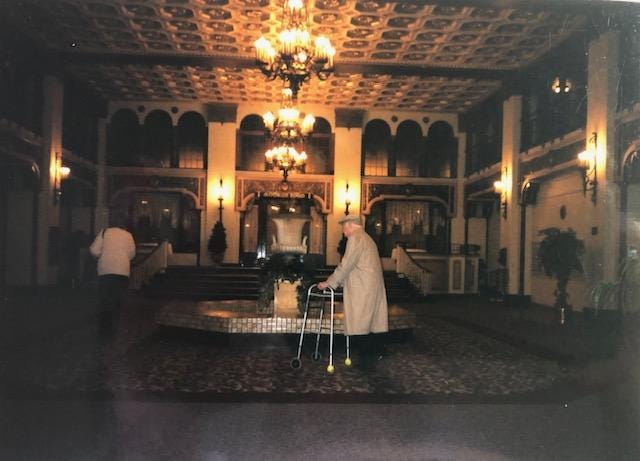
Old-timers push their walkers through the lobby of the Greysolon Plaza, piped music box melody fills the air. There’s no shortage of poor old white people in these parts, a breed noticeably lacking in Los Angeles, although I am adding to their number.
A pizza joint with an adjoining bar and stage appears to be the liveliest local nightspot. I stand at the bar, surrounded by couples and chattering groups. A hardcore show, featuring the Dames and Kentucky Chokehold, is taking a long time to get started. I’m reminded of all the shows I attended during my misspent youth, usually alone, always among the first to arrive, standing around unknown and unnoticed, waiting for the show to begin, never part of any scene. London, of course, has an entirely justified reputation as a cold and unfriendly place, as does Duluth.
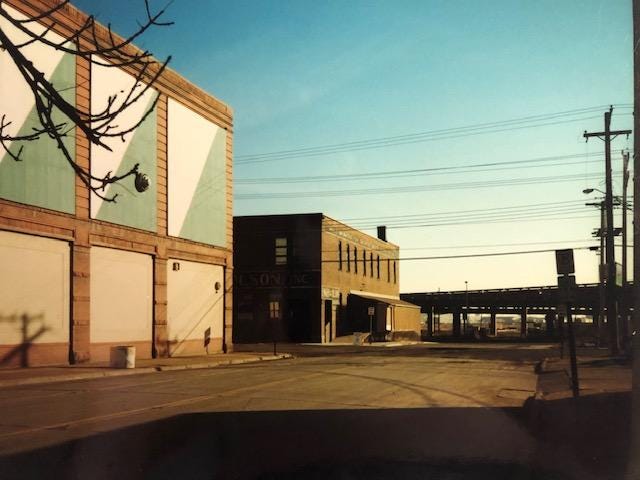
A stranger in late autumn, in the coldest part of the country, driving across the John A. Blatnik bridge between two blighted industrial towns, is in an ideal state of transient desolation. It doesn’t get much better than this. But I’m not ‘feeling it’.
A raucous Halloween party is in full swing in the bar on the ground floor of the Androy. It looks like much more fun than I’m capable of having. A woman in the elevator thrusts a toffee apple into my hand. I fall asleep while watching junk on television, to be awoken after closing time by the bestial whooping, yelling and crashing around of yahoos in the corridor. From what I can overhear, they’re looking for a party. I prop a chair against the door.
A rusting blackened hulk of obsolete and obscure purpose is almost intimidating to gaze upon, such is the sinister majesty of its decay, as I drive aimlessly around the port terminal, through miles of industrial scenery on the banks of Lake Superior.
The Seaway in West Duluth operates solely as a merchant seaman’s hotel, a home for crusty old salts, some of whom are relaxing in the lobby, in tattered furniture, with Curly’s bar, next door.
On a neighboring side street in the dingy maritime environs of Duluth’s west end my attention is drawn to a bleak and forbidding massage parlor. “Sixty dollars gets you a bath, an adult video and a massage, the rest is on tips,” says the haggard, yellow-toothed blonde in the booth. I proceed no further. Surely these women must work on some of the grisliest men in the country.
The rose bushes are bare in Leif Erikson park, and dead leaves are packed in black plastic trash bags. A sparrow twitches around in an ungathered pile of fallen leaves, eyes frantically darting around, unable to take wing, hopping away when I reach out to help it.
The lights in roadside houses twinkle cozily from within and lakes lie glistening in the frozen darkness of northern Minnesota’s Iron Range. A Styrofoam cup of tea lasts all the way from Duluth to Hibbing, Bob Dylan’s boyhood home. Upon arrival, on a Sunday night in November, I’m predictably disappointed to find that the Hibbing Park Hotel is not a lovingly restored relic, as I’d been led to believe over the phone, but a modern monstrosity; and it’s not on Howard Street, the main drag, but out on the highway. I lower my expectations, but not far enough – and even then, I’m still over-idealizing. Nevertheless, in the absence of alternative accommodations, I check in, and immediately leave, driving the mile it takes to reach downtown, and take as much of a stroll as is possible on such a cold and windy night.
“A stranger in late autumn, in the coldest part of the country, driving across the John A. Blatnik bridge between two blighted industrial towns, is in an ideal state of transient desolation.” this sentence slaps. very idk … Denis Johnson